Education is one of the few businesses that stays in demand whatever the economy is doing. Parents spend on their children’s learning before almost anything else, and India has one of the world’s largest school-age populations. That is why an education franchise in India has become a popular choice for first-time entrepreneurs, teachers, and small investors.
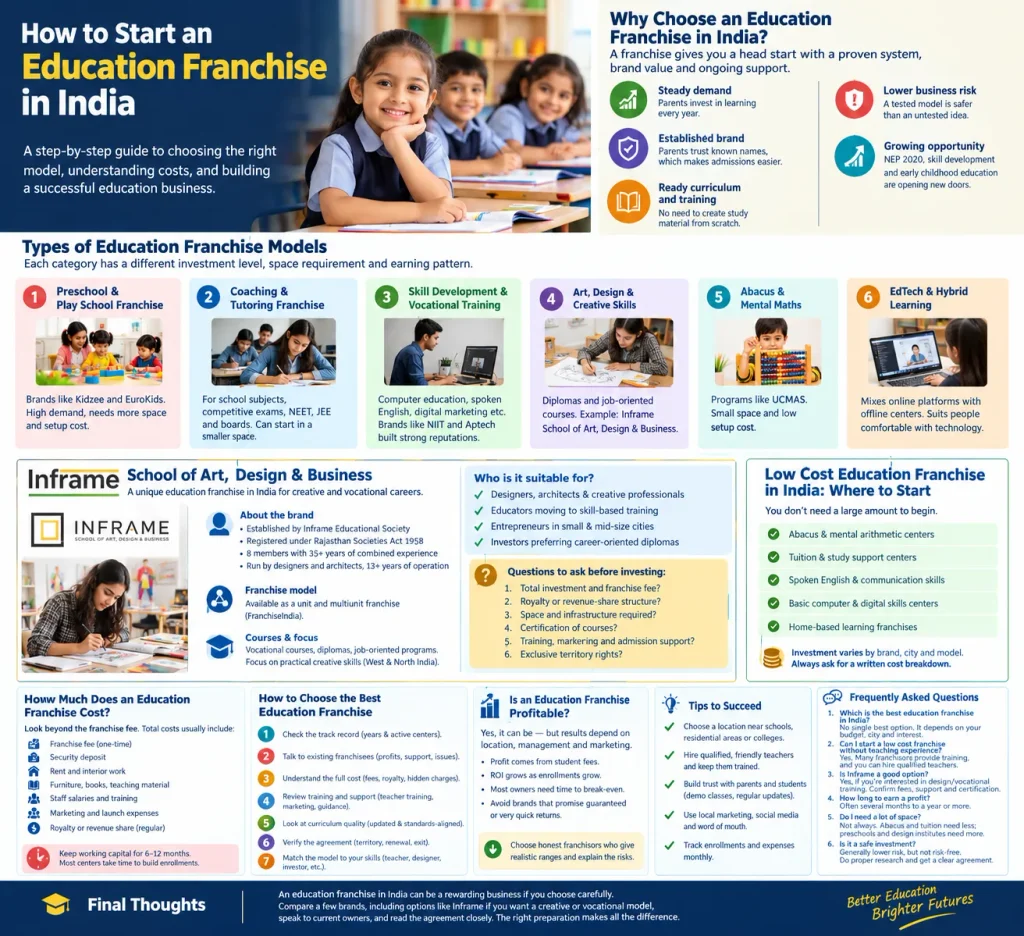
This guide explains how these franchises work, which models suit different budgets, and how to avoid common mistakes before you sign an agreement.
Why Choose an Education Franchise in India?
Starting a coaching center or preschool from scratch means building a brand, designing a curriculum, and earning parents’ trust, all on your own. A franchise gives you a head start. You get a proven system, a known name, and ongoing support.
- Steady demand: Parents invest in learning every year, so the business is less affected by market swings.
- Established brand: Parents trust names they already know, which makes admissions easier.
- Ready curriculum and training: You don’t have to create study material or teaching methods from zero.
- Lower business risk: A tested model is usually safer than an untested idea.
- Growing opportunity: NEP 2020, the push for skill development, and rising interest in early childhood education have opened new space for franchise owners.
Types of Education Franchise Models
Each category has a different investment level, space requirement, and earning pattern.
1. Preschool and Play School Franchise
The most popular category. Brands such as Kidzee and EuroKids run playschool and kindergarten networks across small towns and big cities. It needs more space and setup cost, but demand from young parents is strong.
2. Coaching and Tutoring Franchise
Coaching for school subjects, competitive exams, NEET, JEE, and boards is always in demand. A tuition center franchise can often start in a smaller space.
3. Skill Development and Vocational Training Franchise
Computer education, spoken English, digital marketing, and job-oriented courses are growing fast. Institutes like NIIT and Aptech built their reputation here.
4. Art, Design and Creative Skills Franchise
Diploma and job-oriented courses in design, art, and business skills suit students who want a career in creative fields. Inframe School of Art, Design & Business is an example of this model (details below).
5. Abacus and Mental Maths Franchise
Programs like UCMAS focus on concentration and math skills. They usually need only a small room, which makes them a good fit if you want a low cost education franchise in India.
6. EdTech and Hybrid Learning Franchise
These mix online platforms with offline centers and suit people comfortable with technology.
Inframe School of Art, Design & Business Franchise
If you want something different from regular coaching, Inframe School of Art, Design & Business is an interesting education franchise in India to look at.
About the brand: Inframe was established by the Inframe Educational Society, registered under the Rajasthan Societies Act 1958, and is led by eight members with over 35 years of combined experience in education, administration, and community development. The brand also describes itself as run by designers and architects, with more than 13 years of operation.
Franchise model: Inframe Educational Society is listed on FranchiseIndia as both a unit and a multiunit franchise. That means you can start with a single center and expand to more locations if the business grows.
Courses and focus: The franchise centers on vocational courses, diplomas, and other job-oriented programs, and is listed for West India and North India. The focus is on practical creative skills that lead to jobs or freelance work.
Who is it suitable for?
- Designers, architects, and creative professionals who want to run their own institute
- Educators moving toward skill-based training
- Entrepreneurs in small and mid-size cities where demand for creative careers is growing
- Investors who prefer career-oriented diploma courses over traditional coaching
Questions to ask before investing:
- What are the total investment and the franchise fee?
- What is the royalty or revenue-share structure?
- How much space and what kind of infrastructure is required?
- What certification do the courses offer?
- What training, marketing, and admission support is provided?
- Will you get exclusive territory rights?
Low Cost Education Franchise in India: Where to Start on a Small Budget
You don’t need a large amount to begin. A low cost education franchise in India is possible if you pick the right category.
- Abacus and mental arithmetic centers: Small space, low staff needs.
- Tuition and study support centers: Can run from a modest rented room or part of your home.
- Spoken English and communication skills centers: Low equipment cost and strong demand among students and working youth.
- Basic computer and digital skills centers: Moderate setup, good local demand.
- Home-based learning franchises: Almost no rent, which lowers running costs.
Investment varies widely by brand, city, and model, so always ask the franchisor for a written cost breakdown instead of relying on headline numbers in ads.
How Much Does an Education Franchise Cost?
Look beyond the franchise fee when calculating your total investment. Costs usually include:
- Franchise fee (one-time)
- Security deposit
- Rent and interior work
- Furniture, books, and teaching material
- Staff salaries and teacher training
- Marketing and launch expenses
- Royalty or revenue share, paid regularly
Keep working capital aside for the first 6 to 12 months. Most centers take time to build enrollments, so patience matters as much as money.
How to Choose the Best Education Franchise in India
- Check the track record. How long has the brand operated, and how many centers are active today?
- Talk to existing franchisees. Ask honestly about profits, support, and problems.
- Understand the full cost. Get fees, royalty, and hidden charges in writing.
- Review training and support. Good franchisors offer teacher training, marketing help, and regular guidance.
- Look at curriculum quality. It should be updated and aligned with current standards.
- Verify the agreement. Have a lawyer read the clauses on territory, renewal, and exit.
- Match the model to your skills. A teacher may do well in coaching, a designer in a creative institute, and a business-minded investor in a preschool.
Is an Education Franchise Profitable?
It can be, but results depend on location, management, and how well you market the center. Profit mainly comes from student fees, so your return on investment (ROI) grows as enrollments grow. Most owners need time to reach break-even, so avoid brands that promise guaranteed or very quick returns. Honest franchisors give realistic ranges and explain the risks.
Tips to Succeed as a Franchise Owner
- Choose a location near schools, residential areas, or colleges.
- Hire qualified, friendly teachers and keep them trained.
- Build trust with parents and students through demo classes and regular updates.
- Use local marketing, social media, and word of mouth.
- Track enrollments and expenses every month.
Frequently Asked Questions
1. Which is the best education franchise in India?
There isn’t a single best option. The right choice depends on your budget, city, and interest. Preschools suit larger budgets, while abacus, tuition, or skill centers suit smaller ones.
2. Can I start a low cost education franchise in India without teaching experience?
Yes. Many franchisors provide training, and you can hire qualified teachers while you manage the business.
3. Is Inframe School of Art, Design & Business a good education franchise in India?
It can be a good option for people interested in design and vocational training. Before investing, confirm the fees, royalty, support, and course certification directly with the franchisor, and speak to existing center owners.
4. How long does it take to earn a profit?
It varies by model and location, but many centers take several months to a year or more to break even.
5. Do I need a lot of space?
Not always. Abacus and tuition centers can start in a small space, while preschools and design institutes need more room and proper facilities.
6. Is an education franchise in India a safe investment?
It is generally lower risk than starting a brand from scratch, but not risk-free. Proper research and a clear agreement are essential.
Final Thoughts
An education franchise in India can be a rewarding business if you choose carefully. Decide your budget, compare a few brands, including options like Inframe if you want a creative or vocational model, speak to current owners, and read the agreement closely. Whether you want a low cost education franchise in India or a larger venture, the right preparation makes all the difference.