Introduction
Interior design is more than choosing colours, furniture, and decorations. It is about understanding spaces, creating functional layouts, developing creative concepts, and turning ideas into environments that people enjoy.
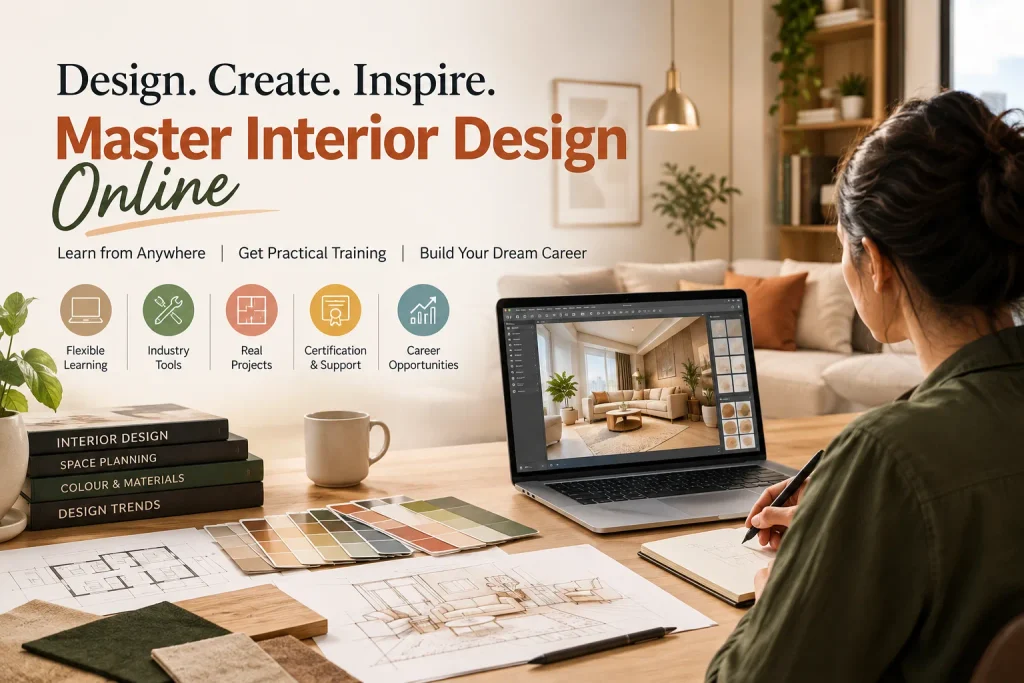
Today, students and aspiring designers can develop these skills without attending a traditional classroom every day. With Interior Design Online learning, you can study from anywhere while building practical knowledge and understanding the tools used in the design industry.
An Interior Design Course Online can be a convenient option for beginners, working professionals, creative students, and anyone who wants to explore a career in interior design. With the right training, you can learn everything from space planning and colour theory to design software, material selection, and project development.
Why Learn Interior Design Online?
Online learning has changed the way people develop professional skills. Instead of limiting education to a physical classroom, students can now access lessons, resources, demonstrations, and projects from almost anywhere.
An Online Interior Design Course can offer several advantages, including:
- Flexible learning from home
- Access to structured course material
- Practical design assignments
- Learning at your own pace
- Exposure to professional design tools
- Opportunities to build a design portfolio
- Convenient learning for students and working professionals
Moreover, online education allows learners to revisit lessons and practice concepts multiple times. This can be particularly useful when learning technical software or developing complex design projects.
What Will You Learn in an Interior Design Course Online?
A good Interior Design Course Online should combine creative concepts with practical skills. Interior design is a broad field, so students need to understand both the artistic and technical sides of the profession.
1. Interior Design Fundamentals
First, students need to understand the basic principles of interior design. These may include balance, proportion, rhythm, harmony, contrast, scale, and composition.
These fundamentals help designers create spaces that look attractive while remaining comfortable and functional.
2. Space Planning
Space planning is one of the most important parts of interior design. It involves understanding the available area and deciding how furniture, pathways, lighting, and functional zones should be arranged.
Through practical exercises, students can learn how to make better use of both small and large spaces.
3. Colour Theory
Colours can completely change the appearance and mood of a room. Therefore, understanding colour combinations is essential for an aspiring interior designer.
An online course can introduce learners to colour palettes, contrast, textures, tones, and colour psychology so they can make more confident design decisions.
4. Furniture and Material Selection
Interior designers work with a wide variety of furniture, finishes, fabrics, flooring, wall treatments, and other materials.
Learning how to select materials based on aesthetics, functionality, durability, and budget is an important part of professional interior design.
5. Design Software
Modern interior designers use digital tools to develop and communicate their ideas. Depending on the course, students may be introduced to tools such as AutoCAD, SketchUp, 3D modelling software, rendering tools, and other design applications.
Consequently, learning these tools can help students turn basic concepts into professional design presentations.
Practical Learning Makes a Difference
Watching lessons is only one part of learning interior design. The real development happens when students apply what they have learned.
For this reason, practical assignments and projects are an important part of an effective Online Interior Design Course.
Students can work on projects such as:
- Residential living room design
- Bedroom and kitchen planning
- Office interior concepts
- Retail space design
- Colour and material boards
- Furniture layouts
- 2D floor plans
- 3D interior concepts
- Mood boards
- Complete interior design presentations
Through these projects, learners can gradually develop their own design approach and create work that can become part of their portfolio.
Who Can Choose Interior Design Online?
Interior Design Online learning can be suitable for people with different backgrounds.
Students
Students who have a creative mindset and an interest in spaces, architecture, furniture, or visual design can use online learning to develop professional skills.
Working Professionals
Professionals who want to develop a new skill or move into the design industry can benefit from the flexibility of online education.
Aspiring Interior Designers
If you already enjoy creating room layouts, selecting colours, or exploring interior styles, an Interior Design Course Online can help turn that interest into structured knowledge.
Entrepreneurs
Interior design skills can also be useful for people interested in starting their own design studio, consultation service, home styling business, or related creative venture.
Build a Professional Interior Design Portfolio
A portfolio is one of the most important assets for an aspiring designer. It allows potential clients or employers to see how you think, plan, and present your design ideas.
During an Online Interior Design Course, students can create different types of projects and gradually organise their best work into a portfolio.
A strong portfolio may include:
- Concept development
- Floor plans
- Mood boards
- Material selections
- Furniture layouts
- 3D visualisations
- Before-and-after concepts
- Residential projects
- Commercial design concepts
Furthermore, a well-presented portfolio can help demonstrate your creativity as well as your technical understanding.
Career Opportunities After Learning Interior Design
Interior design offers opportunities across residential, commercial, hospitality, retail, and other spaces.
After developing the necessary skills, learners can explore roles such as:
- Interior Designer
- Junior Interior Designer
- Residential Interior Designer
- Commercial Interior Designer
- Interior Stylist
- 3D Visualiser
- Space Planner
- Design Consultant
- Furniture and Material Consultant
Some professionals also choose to work independently and build their own interior design practice.
However, career growth depends on several factors, including practical skills, portfolio quality, software knowledge, communication, creativity, and industry experience.
Why Choose an Online Interior Design Course?
Choosing an online course is not simply about convenience. The quality and structure of the training also matter.
Before enrolling, consider whether the course provides:
- Practical Projects – Look for opportunities to apply concepts through real or simulated design projects.
- Professional Software Training – Software skills can be valuable when creating drawings, layouts, and visual presentations.
- Structured Learning – A clear curriculum can make it easier to progress from basic concepts to advanced topics.
- Portfolio Development – Projects that can be included in a professional portfolio add practical value.
- Industry-Relevant Skills – The course should focus on skills that are useful in real design environments.
- Flexible Learning – Online education should make it easier to balance learning with work, college, or other responsibilities.
Interior Design Online: Learn at Your Own Pace
One of the biggest advantages of Interior Design Online education is flexibility.
You can study from your home, revisit lessons when needed, and spend additional time practising difficult concepts. This flexibility is especially useful for learners who cannot attend regular classroom sessions.
At the same time, online learning requires discipline. Creating a study schedule and consistently working on projects can make the learning experience more productive.
Frequently Asked Questions
Is an Online Interior Design Course suitable for beginners?
Yes. Many online courses are designed to introduce beginners to fundamental concepts before moving into more advanced topics. However, it is important to check the curriculum before enrolling.
Can I learn interior design from home?
Yes. With an online course, you can learn interior design concepts, software, and project development from home. A computer and suitable design software may be required for technical practice.
Do I need an architecture background to learn interior design?
No. A background in architecture is not always necessary to begin learning interior design. Creativity, spatial understanding, willingness to practise, and technical learning can all help.
Can an Interior Design Course Online help with a career?
An online course can help you develop foundational and practical skills. However, your portfolio, software proficiency, practical experience, communication skills, and continued learning also play an important role in career development.
What software is useful for interior designers?
Depending on the type of work, interior designers may use software such as AutoCAD, SketchUp, 3D visualisation and rendering applications, and other presentation tools.
Start Your Interior Design Journey
Interior design brings together creativity, technology, planning, and problem-solving. With the right training, an idea can develop into a complete concept, and a simple space can become a meaningful environment.
An Online Interior Design Course provides a flexible way to learn these skills while working on practical projects and developing a professional portfolio.
So, if you are passionate about creative spaces and want to develop professional design skills, Interior Design Online learning can be a practical starting point.
Design. Create. Inspire. And start building your future in interior design.