Interior design is no longer limited to traditional classrooms. With online learning becoming more accessible, students, working professionals, and creative individuals can now develop interior design skills from home through structured digital courses.
An online interior design course with certificate can help learners understand design fundamentals, space planning, colour theory, materials, furniture selection, lighting, and industry tools while studying at their own pace.
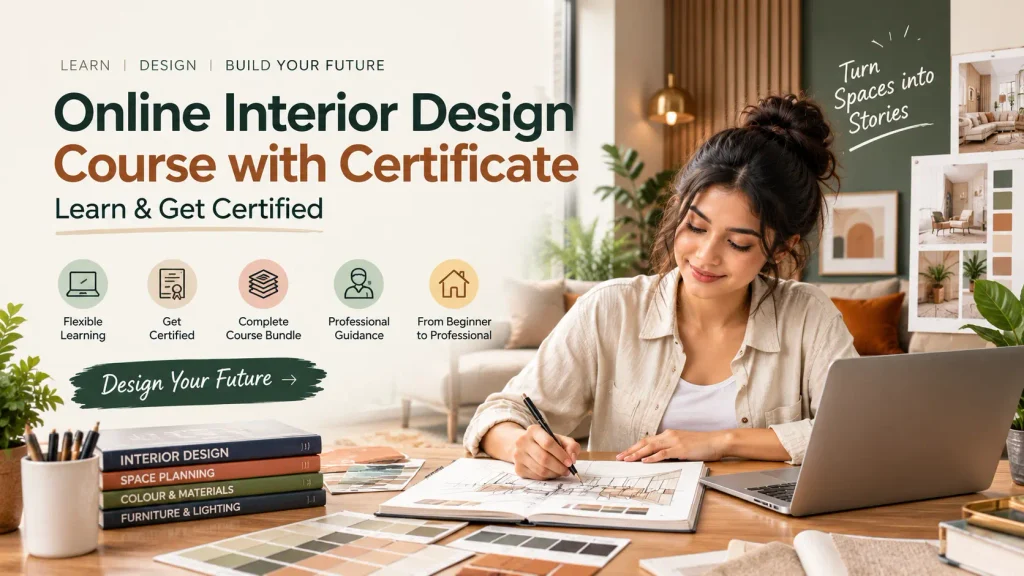
Whether you are a complete beginner or someone looking to develop professional design skills, choosing the right course can provide a structured path from basic concepts to practical interior design projects.
What Is an Online Interior Design Course?
An online interior design course is a digital learning program that teaches the principles and practical techniques used to design residential and commercial spaces.
Depending on the course, students may learn:
- Interior design fundamentals
- Space planning
- Colour theory
- Furniture selection
- Lighting design
- Materials and finishes
- Mood boards
- Floor plans
- 2D and 3D visualization
- Residential interior design
- Commercial interior design
- Design presentation
- Client communication
- Project planning
Some programs also introduce software used by professional designers, depending on the curriculum.
For beginners, an online interior design course can be a flexible way to explore the field before pursuing a longer professional program.
Why Choose an Online Interior Design Course?
Online learning provides flexibility that can be useful for students and working professionals.
Learn from Anywhere
You can study from home or any location with a suitable internet connection.
Flexible Learning
Recorded lessons and digital learning resources can allow students to study according to their schedules.
Develop Practical Skills
A well-designed course should combine theory with practical exercises and design projects.
Build a Design Portfolio
Projects completed during the course can help learners start developing a portfolio that demonstrates their design thinking and visual skills.
Learn Industry-Relevant Tools
Some courses introduce software and digital tools used for drafting, visualization, presentations, and project development.
What Will You Learn in an Interior Design Course?
The exact curriculum varies between institutions, but a comprehensive program generally covers several important areas.
Interior Design Fundamentals
Students begin by understanding the basic principles of design, including balance, proportion, rhythm, harmony, contrast, and functionality.
These principles help designers create spaces that are both visually appealing and practical.
Space Planning
Space planning is one of the most important interior design skills. It involves understanding how furniture, circulation areas, functional zones, and architectural elements work together.
Students may learn how to:
- Analyse a space
- Create functional layouts
- Plan furniture placement
- Understand circulation
- Use space efficiently
- Develop floor plans
Colour and Material Selection
Colour can influence the appearance and atmosphere of a space. Students learn about colour combinations, palettes, textures, materials, and finishes.
Material knowledge may include wood, stone, glass, metal, fabrics, tiles, laminates, and other commonly used interior finishes.
Lighting Design
Lighting has an important role in interior spaces. Students can learn about ambient, task, and accent lighting and how different lighting solutions influence a room.
Furniture and Decor
Furniture should complement the size, function, style, and overall concept of a space.
An interior design course can teach students how to select furniture, accessories, fabrics, and decorative elements according to a design concept.
Free Interior Design Course: Is It Enough to Start?
Many students begin their search with a free interior design course because they want to understand the field before making a financial commitment.
Free learning resources can be useful for learning basic concepts such as:
- Interior design principles
- Colour theory
- Basic space planning
- Design terminology
- Inspiration and trends
- Basic sketching
However, free resources may not always provide a complete structured curriculum, personalised feedback, practical assignments, portfolio development, or formal certification.
If your goal is professional development, compare the curriculum, practical training, projects, faculty support, software training, and certification offered by different programs.
Complete Interior Design Course Bundle: What Should It Include?
A complete interior design course bundle should ideally cover the subject from fundamentals through practical application.
A comprehensive learning package may include:
Design Fundamentals
Understanding design principles, elements, composition, proportion, and visual balance.
Space Planning
Learning how to create functional layouts for different types of spaces.
Residential Design
Understanding bedrooms, living rooms, kitchens, bathrooms, dining areas, and other residential spaces.
Commercial Design
Learning the fundamentals of offices, retail spaces, cafés, studios, hospitality environments, and other commercial projects.
Materials and Finishes
Understanding materials, textures, finishes, durability, maintenance, and aesthetic considerations.
Lighting
Learning how lighting can support functionality and create different moods.
Design Software
Depending on the program, students may learn tools used for drafting, modelling, rendering, or presentation.
Practical Projects
Projects help students apply concepts instead of only studying theory.
Portfolio Development
A portfolio can demonstrate a learner’s design concepts, drawings, layouts, visualizations, and completed projects.
Certified Interior Design Course Online: What Does Certification Mean?
A certified interior design course online generally provides a certificate after the learner completes the course requirements.
Before enrolling, students should understand exactly what the certificate represents.
Check:
- Name of the institution
- Course duration
- Curriculum
- Assessment process
- Practical projects
- Certification requirements
- Software training
- Portfolio support
- Industry exposure
- Whether the certificate is a course-completion certificate or another type of qualification
A certificate can demonstrate course completion, but professional opportunities also depend on skills, portfolio quality, practical experience, communication, and knowledge.
Professional Interior Design Course: Who Should Choose It?
A professional interior design course can be suitable for people who want deeper knowledge and practical exposure rather than only learning basic design concepts.
It may be useful for:
- Students interested in interior design
- Working professionals seeking a career change
- Freelancers
- Creative professionals
- Architects who want additional interior design skills
- Entrepreneurs interested in interior design services
- Home décor enthusiasts
- Aspiring interior designers
The appropriate course level depends on your previous education, experience, career goals, and available time.
Online Interior Design Course with Certificate: What Are the Benefits?
Choosing an online interior design course with certificate can offer several benefits when the course is structured properly.
Flexible Learning
Online programs can allow learners to balance education with work, college, or other responsibilities.
Practical Knowledge
Projects and assignments can help students understand how design concepts are applied to real spaces.
Portfolio Building
A portfolio can be one of the most useful outcomes of interior design education because it allows students to demonstrate their creative and technical abilities.
Career Preparation
A structured course can introduce learners to the workflow involved in design projects, from understanding client requirements to presenting concepts.
Certification
A course certificate can provide documented evidence that the learner completed the program.
Interior Design Software and Digital Skills
Modern interior designers often use digital tools to communicate design concepts.
Depending on the course, students may be introduced to software for:
- 2D drafting
- 3D modelling
- Rendering
- Floor plans
- Presentation boards
- Mood boards
- Interior visualization
Learning software is valuable, but it should complement rather than replace fundamental design skills.
A strong designer needs both creative thinking and technical understanding.
How to Choose the Best Online Interior Design Course
With many online programs available, comparing courses carefully is important.
Check the Curriculum
Look for a curriculum that covers design fundamentals, space planning, materials, lighting, furniture, visualization, and practical projects.
Look at Course Duration
Choose a duration that matches your learning goals. A short introductory course and a professional-level program serve different purposes.
Check Practical Training
Interior design is a practical field. Look for assignments and projects rather than a program based entirely on video lectures.
Review Faculty and Mentorship
Access to experienced instructors or mentors can help students receive feedback on their work.
Check Portfolio Support
Ask whether the course helps students develop professional-looking projects and presentations.
Understand the Certificate
Before enrolling, understand what type of certificate you receive and what requirements you need to complete.
Compare Course Fees
Do not compare courses based only on price. Consider the curriculum, training, projects, mentorship, software exposure, and other resources included.
Online Interior Design Course vs Classroom Course
Both learning formats can have advantages.
| Feature | Online Course | Classroom Course |
|---|---|---|
| Location | Learn remotely | Attend physical campus |
| Flexibility | Generally higher | Fixed schedule |
| Learning Format | Videos, live classes, digital resources | Classroom teaching |
| Practical Work | Online projects and assignments | Studio-based activities |
| Interaction | Online communication | Direct classroom interaction |
| Convenience | Suitable for remote learners | Requires travel or relocation |
| Certification | Depends on institution | Depends on institution |
The best format depends on your learning preferences, schedule, location, and career objectives.
Career Opportunities After Learning Interior Design
Interior design skills can be applied across several areas.
Depending on their education and experience, learners can explore roles such as:
- Interior Designer
- Junior Interior Designer
- Residential Interior Designer
- Commercial Interior Designer
- Interior Stylist
- 3D Visualizer
- Space Planner
- Design Consultant
- Furniture Designer
- Interior Design Freelancer
Some learners may also choose entrepreneurship and start their own interior design studio after gaining sufficient knowledge and practical experience.
How to Build a Strong Interior Design Portfolio
A portfolio is an important part of presenting your design abilities.
Your portfolio can include:
- Concept boards
- Mood boards
- Floor plans
- Furniture layouts
- Material boards
- Colour palettes
- 3D views
- Residential projects
- Commercial projects
- Before-and-after concepts
- Design explanations
Focus on showing your design process rather than only presenting final images.
A good portfolio should communicate what you designed, why you designed it, and how you solved the client’s requirements.
Is an Online Interior Design Course Good for Beginners?
Yes, an online course can be a useful starting point for beginners who want to understand interior design.
However, beginners should choose a program that starts with fundamentals and gradually introduces more advanced concepts.
A structured learning journey could look like:
Learn → Practise → Create → Get Feedback → Build Portfolio
This approach can help transform theoretical knowledge into practical design skills.
Final Thoughts
An online interior design course with certificate can be a convenient way to learn interior design skills while maintaining flexibility in your schedule.
Whether you are searching for a free interior design course, an online interior design course, a complete interior design course bundle, or a professional interior design course, the most important factors are the curriculum, practical training, mentorship, projects, software exposure, and certification.
For students who want structured professional learning, a certified interior design course online can provide a clear learning pathway. At the same time, learners should remember that a certificate is only one part of building a career. Practical skills, creativity, portfolio quality, technical knowledge, and industry experience are equally important.
Choose a course that matches your current skill level and career goals, practise consistently, and use every project as an opportunity to build your design portfolio.
Frequently Asked Questions
Can I learn interior design through an online course?
Yes. Online courses can teach interior design fundamentals, space planning, colour theory, materials, furniture, lighting, visualization, and other design skills. The depth of training depends on the course.
Is a free interior design course useful for beginners?
A free interior design course can be useful for learning basic concepts and understanding whether interior design interests you. For advanced professional skills, a structured program with practical projects may provide broader training.
What is an online interior design course with certificate?
It is an online learning program that provides a certificate after the learner completes the required coursework or assessments. Students should check the institution and certification details before enrolling.
What should a complete interior design course bundle include?
Ideally, it should include design fundamentals, space planning, colour theory, materials, lighting, furniture, software training, practical projects, and portfolio development.
Can I become an interior designer after an online course?
An online course can help you develop foundational and practical skills, but career requirements vary by role and employer. Building a strong portfolio and gaining practical experience can be important for professional opportunities.
Which is better: a free course or a professional interior design course?
A free course can be useful for basic learning and exploration, while a professional course may provide a more structured curriculum, practical projects, mentorship, software training, and certification.
Does an online interior design course provide a certificate?
Many online courses offer certificates, but the type and recognition of the certificate vary. Always check the course provider’s certification details before enrolling.