Explore B.Des and B.Voc in Interior Design, including syllabus, subjects, software, practical projects, skills and career opportunities.
Choosing the right undergraduate program can be an important step for students who want to build a career in interior design. Two options that students may explore are B.Des in Interior Design and B.Voc in Interior Design.
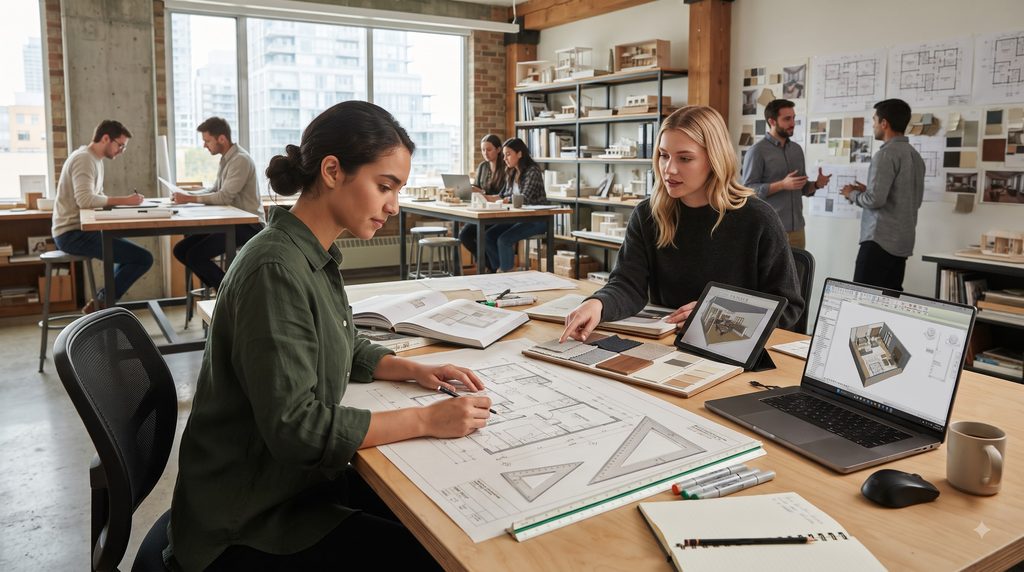
Both programs can provide an opportunity to learn interior design through a combination of creative concepts, technical skills, design projects, and practical learning. However, their academic approach and course structure can differ depending on the university or institution offering the program.
Understanding the B.Des in Interior Design, B.Des Interior Design syllabus, B.Voc in Interior Design, and B.Voc Interior Design syllabus can help students understand what they may study during their undergraduate journey.
What Is B.Des in Interior Design?
B.Des in Interior Design is an undergraduate design program focused on developing creative thinking, design knowledge, technical understanding, and practical abilities related to interior spaces.
The program generally introduces students to the complete design process—from understanding a space and developing concepts to preparing drawings and presenting the final design.
Students may work on different types of design projects and gradually develop an understanding of how interiors are planned according to function, aesthetics, materials, users, and spatial requirements.
A B.Des program can also place strong emphasis on design thinking and creative problem-solving.
B.Des Interior Design Syllabus
The B.Des Interior Design syllabus can vary between universities, but students may encounter subjects covering several areas of interior and spatial design.
Common areas may include:
- Design fundamentals
- Drawing and visual communication
- Design theory
- Space planning
- Interior construction
- Materials and finishes
- Furniture design
- Colour studies
- Lighting design
- Architectural graphics
- Computer-aided design
- 3D modelling and visualization
- Residential interior design
- Commercial interior design
- Design studio projects
- Professional practice
The syllabus may become more advanced as students progress through different semesters.
Early coursework may focus on fundamentals and visual skills, while later projects can involve more complex spaces and detailed design development.
What Is B.Voc in Interior Design?
The B.Voc in Interior Design is an undergraduate vocational program that combines academic learning with practical and skill-based education.
The focus of a B.Voc in Interior Design can be particularly useful for students who want to develop practical skills alongside their academic education.
Students may learn how interior projects are planned, documented, visualized, and presented. Depending on the curriculum, the program may also include practical assignments, software training, project work, and industry-oriented learning.
The exact structure of the B.Voc program depends on the institution and university.
B.Voc Interior Design Syllabus
The B.Voc Interior Design syllabus can include both foundational design subjects and practical skill development.
Subjects may cover areas such as:
- Fundamentals of interior design
- Drawing and drafting
- Space planning
- Colour and composition
- Materials and finishes
- Furniture and furnishings
- Lighting
- Interior construction
- CAD drafting
- 3D visualization
- Residential interiors
- Commercial interiors
- Project documentation
- Design presentations
- Practical projects
- Professional skills
The combination of theoretical concepts and practical activities can help students understand how interior design principles are applied to real design problems.
B.Des in Interior Design Syllabus: What Can Students Learn?
The B.Des in Interior Design syllabus generally develops gradually, allowing students to build their knowledge over multiple stages.
Design Fundamentals
Students may begin by learning fundamental principles such as balance, proportion, scale, rhythm, contrast, composition, and visual hierarchy.
These concepts form the foundation for developing effective interior spaces.
Drawing and Visual Communication
Drawing is an important way for designers to communicate ideas.
Students may learn sketching, perspective drawing, technical representation, presentation techniques, and other forms of visual communication.
Space Planning
Space planning teaches students how to organize interiors according to their function and users.
Students can explore furniture placement, circulation, dimensions, zoning, and relationships between different areas within a space.
Materials and Finishes
Interior projects involve many materials, including wood, stone, glass, metal, fabric, tiles, laminates, and other finishes.
Students may study their visual properties, applications, performance, and suitability for different spaces.
Furniture Design
Furniture is closely connected to interior spaces.
Depending on the syllabus, students may explore furniture concepts, proportions, ergonomics, materials, construction, and furniture placement.
Lighting Design
Lighting influences both the appearance and functionality of an interior.
Students may learn about natural and artificial lighting, fixture placement, ambient lighting, task lighting, and the relationship between lighting and materials.
Digital Design Tools
Modern interior design education often includes digital tools used for drafting, modelling, rendering, and presentations.
Depending on the university curriculum, students may work with software such as AutoCAD, SketchUp, 3ds Max, Revit, V-Ray, Photoshop, or other relevant design tools.
B.Voc Interior Design Syllabus: Practical Learning
The B.Voc Interior Design syllabus can place considerable emphasis on skill development and practical application.
Students may work on projects where they have to apply concepts such as space planning, material selection, furniture arrangement, technical drawings, and 3D visualization.
Practical assignments can help students understand the relationship between design ideas and their implementation.
Instead of simply studying individual subjects, students can gradually learn how different skills work together within an interior project.
Difference Between B.Des in Interior Design and B.Voc in Interior Design
Although both programs relate to interior design, their educational approach may be different.
B.Des in Interior Design generally follows a design-oriented academic approach. It can place greater emphasis on creative exploration, design thinking, conceptual development, visual communication, and studio-based design projects.
B.Voc in Interior Design generally follows a vocational and skill-oriented approach. It can combine academic learning with practical training and industry-related skills.
The actual difference depends on the university and curriculum, so students should compare the official syllabus of the specific programs they are considering.
Which Subjects Are Common in Both Programs?
There can be considerable overlap between a B.Des and B.Voc curriculum because both programs are related to interior design.
Students in either program may study areas such as:
- Interior design fundamentals
- Space planning
- Drawing
- Materials
- Furniture
- Lighting
- CAD
- 3D visualization
- Interior projects
- Design presentations
The depth and teaching approach can differ, however, depending on the institution.
Practical Projects in Interior Design Education
Projects are an important part of learning interior design.
A student may work on residential spaces, offices, retail environments, hospitality spaces, or other interior projects.
A project can involve several stages:
- Understanding the design brief
- Studying the space
- Developing initial concepts
- Preparing layouts
- Selecting materials and colours
- Developing furniture and lighting concepts
- Creating technical drawings
- Preparing 3D visualizations
- Presenting the final design
Working through these stages can help students understand how an interior design project develops from an initial idea into a complete proposal.
Software Skills in B.Des and B.Voc Interior Design
Digital tools are an important part of modern interior design education.
Students may use different software for different stages of the design process.
AutoCAD can be used for technical drawings and drafting.
SketchUp can help with 3D modelling and spatial development.
3ds Max and V-Ray can be used for detailed modelling and visualization.
Revit can support building and interior documentation workflows.
Photoshop can be useful for presentations, image editing, mood boards, and visual communication.
The exact software included should be checked in the official curriculum of the program.
Building a Portfolio During B.Des or B.Voc
A strong portfolio can help students demonstrate their development throughout the program.
Instead of showing only final images, students can include different stages of their design process.
A portfolio may contain:
- Concept sketches
- Mood boards
- Floor plans
- Furniture layouts
- Material boards
- Technical drawings
- 3D models
- Rendered views
- Design presentations
- Completed academic projects
Regularly documenting projects can make it easier to build a professional portfolio by the end of the program.
Career Scope After B.Des in Interior Design and B.Voc in Interior Design
After completing a B.Des in Interior Design or B.Voc in Interior Design, graduates can explore different roles depending on their skills, portfolio, experience, and career interests.
Potential roles can include:
- Interior Designer
- Junior Interior Designer
- Interior Design Assistant
- Space Planner
- CAD Designer
- 3D Visualizer
- Interior Design Consultant
- Furniture Design Assistant
Some graduates may also explore freelance design work or develop their own professional practice as they gain experience.
How to Choose Between B.Des and B.Voc
When comparing B.Des in Interior Design and B.Voc in Interior Design, students should look beyond the course name.
Consider:
- Complete syllabus
- University recognition
- Course structure
- Practical training
- Design studio projects
- Software training
- Faculty experience
- Industry exposure
- Portfolio development
- Assessment methods
- Career guidance
- Available facilities
Most importantly, read the official syllabus carefully and understand what you will actually study during the program.
Final Thoughts
Both B.Des in Interior Design and B.Voc in Interior Design can provide a structured pathway for students interested in developing professional interior design skills.
The B.Des Interior Design syllabus may offer a strong focus on design thinking, creative development, visual communication, and studio-based projects, while the B.Voc Interior Design syllabus can combine academic education with practical and vocational skill development.
Before choosing a program, compare the complete curriculum, practical opportunities, software training, project work, and academic structure. The right choice ultimately depends on your learning goals and the specific program offered by the university or institution.