Explore jewellery design training in India with courses, classes, diploma programs and 6-month options. Learn skills, CAD, portfolios and career paths.
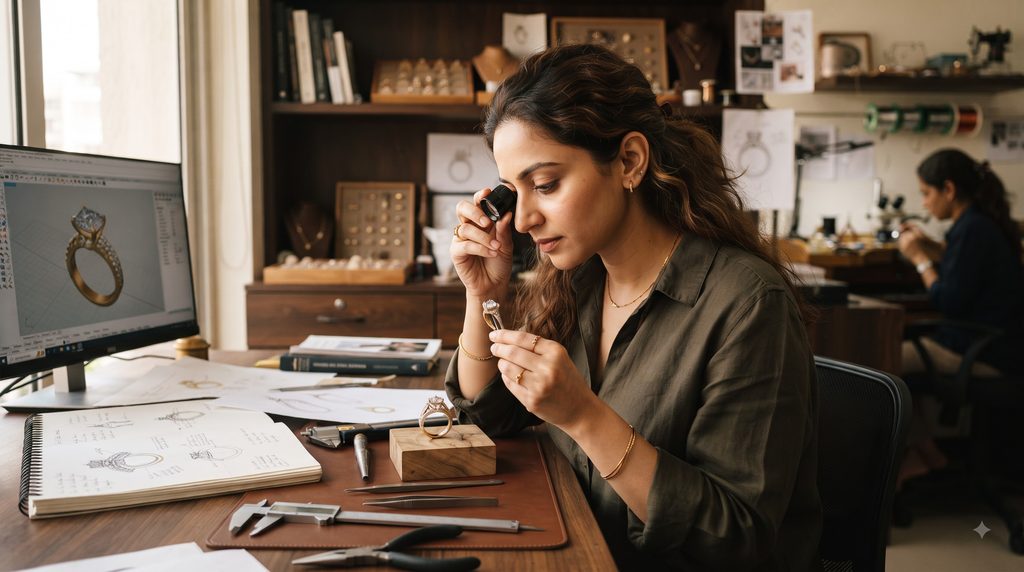
Jewellery design is a creative field where imagination meets technical knowledge. From the first pencil sketch to a detailed digital model, designers work through several stages to develop jewellery that is attractive, practical, and suitable for production.
For students interested in fashion, drawing, craftsmanship, and creative design, professional training can provide a structured way to build these skills. There are several learning options available, including a jewellery design course, practical jewellery design classes, jewellery design diploma courses, and a 6 months jewellery design course.
If you are planning to study jewellery design, this guide can help you understand what to look for in a program and how different training options can support your learning journey.
Why Learn Jewellery Design?
Jewellery has always been closely connected with fashion, culture, celebrations, and personal expression. Modern jewellery design combines traditional influences with contemporary styles and digital technology.
Learning jewellery design can help you understand how to:
- Develop original design concepts
- Sketch jewellery accurately
- Work with different forms and proportions
- Represent gemstones and metals
- Create detailed jewellery renderings
- Explore CAD-based jewellery design
- Develop themed collections
- Present designs professionally
The field can be suitable for people who enjoy creative work but also want to develop practical and technical skills.
What Is a Jewellery Design Course?
A jewellery design course teaches the fundamental principles and processes involved in creating jewellery concepts.
Students may begin with basic sketching and design exercises before progressing to more detailed projects. Depending on the program, the curriculum may include traditional drawing as well as digital jewellery design.
Common areas of study include:
Jewellery Sketching
Students learn how to draw rings, earrings, pendants, bracelets, necklaces, and other jewellery forms with appropriate proportions and details.
Design Principles
Balance, symmetry, proportion, rhythm, contrast, colour, and composition are important when creating visually appealing jewellery.
Rendering
Rendering techniques help designers communicate how metals, gemstones, textures, and finishes may appear in a finished piece.
Gemstones and Materials
Understanding the visual characteristics of gemstones and jewellery materials can help designers make better design decisions.
CAD Jewellery Design
Digital tools allow designers to develop detailed three-dimensional jewellery models and explore designs more accurately.
Portfolio Development
Students can organise their strongest projects into a portfolio that demonstrates their creative and technical abilities.
Finding a Jewellery Design Course in India
When searching for a jewellery design course in India, you may find programs with different durations and specialisations.
Some courses focus mainly on jewellery sketching and illustration, while others combine traditional design with CAD and digital modelling.
Before choosing a course, consider:
- Curriculum
- Course duration
- Practical assignments
- Faculty experience
- CAD or software training
- Portfolio projects
- Learning format
- Certification
- Career guidance
The course should match your current skill level and the type of jewellery design work you want to explore.
What Happens in Jewellery Design Classes?
Jewellery design classes generally combine demonstrations, practice, assignments, and feedback.
A typical learning process may begin with basic shapes and forms. Students then progress toward complete jewellery concepts and more detailed presentations.
For example, a student might start by drawing simple ring forms before developing gemstone rings, statement jewellery, or a complete collection.
Regular practice can help improve:
- Drawing confidence
- Proportion
- Detailing
- Rendering
- Colour application
- Design thinking
- Presentation skills
Instructor feedback can also help students identify weaknesses and refine their work.
Exploring Jewellery Design Diploma Courses
For students looking for structured and comprehensive training, jewellery design diploma courses can provide a broader learning experience.
A diploma program may allow more time for practical assignments and portfolio projects.
Depending on the institute, students may study:
- Jewellery illustration
- Sketching techniques
- Rendering
- Colour theory
- Gemstone studies
- Material knowledge
- Design development
- Jewellery CAD
- Collection development
- Portfolio presentation
When comparing diploma programs, look at the actual syllabus rather than relying only on the program title.
What Can You Learn in a 6 Months Jewellery Design Course?
A 6 months jewellery design course can be suitable for learners who want focused training over a shorter period.
The exact syllabus depends on the institute, but students may work on fundamental and intermediate design skills.
A six-month program can potentially include:
Foundation Drawing: Understanding lines, shapes, proportions, and jewellery forms.
Jewellery Sketching: Developing detailed designs for different types of jewellery.
Rendering: Representing metals, stones, textures, and finishes.
Design Development: Turning initial concepts into refined jewellery designs.
Digital Design: Exploring jewellery CAD and computer-based modelling.
Portfolio Projects: Creating selected pieces of work for professional presentation.
Students should remember that course completion is only the beginning. Continued practice and portfolio development are important for improving design skills.
How to Select a Jewellery Design Institute
Choosing the right jewellery design institute requires more than comparing course names.
Review the Syllabus
Make sure the course covers the areas you want to learn.
Check Practical Exposure
Ask how many projects students complete and how much time is spent on hands-on work.
Research Faculty
Experienced instructors can provide valuable feedback and practical design guidance.
Check CAD Training
If digital jewellery design interests you, find out which software is taught and whether students get enough practice.
Look at Student Portfolios
Previous student work can provide insight into the type of projects and skills developed during the course.
Understand Career Support
If career preparation is important to you, ask whether the institute provides portfolio guidance, interview preparation, or other forms of career support.
Skills Needed to Become a Jewellery Designer
Jewellery designers need a combination of creative and technical skills.
Creativity
Designers need to generate original ideas and explore different styles.
Observation
Careful observation helps designers understand shapes, proportions, textures, and details.
Drawing
Sketching is useful for communicating ideas quickly during the early stages of design.
Technical Understanding
Knowledge of materials, gemstones, dimensions, and CAD can help connect creative ideas with practical design requirements.
Communication
Designers often need to explain their concepts through sketches, mood boards, presentations, or digital models.
Career Opportunities After Jewellery Design Training
After completing relevant training, students can explore different roles depending on their interests and portfolio.
Potential career options include:
- Jewellery Designer
- CAD Jewellery Designer
- Jewellery Illustrator
- Jewellery Design Assistant
- Jewellery Stylist
- Product Designer
- Freelance Jewellery Designer
- Jewellery Entrepreneur
Some professionals work with jewellery brands, manufacturers, retailers, design studios, or independent clients.
Others may choose to develop their own jewellery collections or freelance design services.
Building a Strong Jewellery Design Portfolio
A portfolio gives potential employers or clients an opportunity to understand your abilities.
Instead of including every project, select work that shows your strongest skills.
A good portfolio can include:
- Design research
- Mood boards
- Initial sketches
- Refined concepts
- Jewellery renderings
- Gemstone studies
- CAD models
- Collection designs
- Final presentation sheets
It can also be useful to show the development process behind selected designs. This demonstrates how you move from an initial idea to a finished concept.
Traditional Design and Digital Jewellery Design
Modern jewellery design often combines traditional and digital methods.
Hand sketching remains useful for quickly exploring ideas and communicating concepts. CAD, meanwhile, allows designers to develop detailed digital models.
Learning both approaches can give students a broader understanding of the design process.
If you are selecting a course, check whether it offers opportunities to practise both creative sketching and digital design.
How to Make the Most of Your Jewellery Design Course
Simply attending classes is not enough to build strong design skills.
Try to:
- Practise sketching regularly
- Maintain a design inspiration folder
- Study different jewellery styles
- Experiment with materials and colours
- Complete additional personal projects
- Ask instructors for feedback
- Update your portfolio regularly
- Learn relevant digital tools
- Observe professional jewellery collections
Consistent practice can help turn classroom knowledge into practical ability.
Which Jewellery Design Program Should You Choose?
Different programs can meet different learning requirements.
A general jewellery design course can introduce you to the fundamentals of the field.
Jewellery design classes can provide focused learning and regular practice.
Jewellery design diploma courses can offer a more structured and comprehensive learning path.
A 6 months jewellery design course can suit learners who prefer focused training within a defined period.
Before choosing, consider your existing skills, available time, career goals, and the level of training you need.
Start Your Jewellery Design Learning Journey
Jewellery design combines creativity, craftsmanship, fashion, and technology. With structured learning and consistent practice, students can develop the skills needed to create jewellery concepts and build professional portfolios.
If you are searching for a jewellery design course in India, compare different programs based on curriculum, practical projects, faculty, software training, and portfolio development.
Whether you choose jewellery design classes, jewellery design diploma courses, or a 6 months jewellery design course, focus on gaining practical knowledge and developing a portfolio that reflects your abilities.
Choosing a suitable jewellery design institute can give you the opportunity to learn from experienced mentors, practise your skills, explore different design approaches, and prepare for the next stage of your jewellery design journey.