Not everyone has the money to build a school or a big coaching institute. But many people have something just as valuable: a strong interest in education, a local network, and the drive to build something of their own. If that sounds like you, a cheap education franchise could be the right starting point.
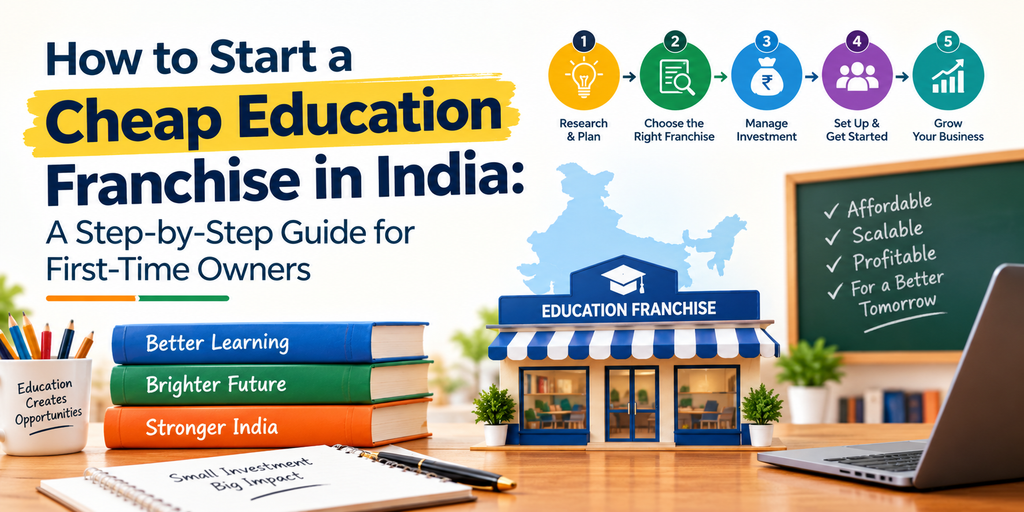
In this guide, we walk you through the process step by step, from understanding your budget to welcoming your first batch of students.
Who Is a Cheap Education Franchise Best For?
This kind of business suits several types of people:
- Teachers and tutors who want to grow their own small classes into a proper brand
- Working professionals looking for a second income source
- Homemakers who want to start something from home or a nearby rented room
- Fresh graduates who prefer entrepreneurship over a job
- Retired people who want a meaningful, low-stress business
You do not need to be an expert in business. Most franchisors guide you through the basics.
What You Actually Get With an Education Franchise
When you join a brand, you are not just paying for a name. A good franchisor typically offers:
- A ready curriculum and lesson plans
- Teacher training and orientation
- Study material, workbooks, or digital content
- Marketing designs, such as banners, brochures, and social media posts
- Ongoing support for admissions and operations
This ready-made system is what makes a cheap education franchise in India a lower-risk choice than starting a coaching business from scratch.
Step 1: Decide Your Budget Honestly
Before you call any brand, work out how much you can comfortably invest. Do not forget to include money for the months when income will be slow.
Your total budget should cover:
- Franchise fee
- Rent and security deposit
- Furniture and classroom setup
- Study kits and initial stock
- Staff salaries
- Marketing and admission campaigns
- A small emergency fund
A common beginner mistake is spending the entire budget on setup and having nothing left for running costs.
Step 2: Pick the Right Education Segment
Different segments need different investment levels. Here are some popular low investment education franchise options:
Abacus and mental maths: Small space, simple setup, and strong parent interest.
Phonics and spoken English: Useful for kids and adults, with growing demand in smaller towns.
Coding for kids: A modern skill that many parents want their children to learn early.
Tuition and test preparation: Steady demand, especially near schools and colleges.
Computer and vocational training: Good for students and job seekers who need practical skills.
Preschool or playschool: Needs more investment and safety arrangements, but it can be a strong long-term business.
Choose a segment where you see real local demand. Walk around your area, talk to parents, and see what is missing.
Step 3: Research and Shortlist Brands
Make a list of three to five franchise brands and compare them on the same points. Do not rely only on advertisements or social media pages.
Ask each brand:
- How many centres are currently running?
- Can I speak to existing franchise owners?
- What is the total cost, including all fees?
- Is there a royalty, and how much?
- How long is the agreement, and how can it be renewed or ended?
- What training and support will I receive?
- Will you give exclusive rights to my area?
A trustworthy brand will answer clearly and put the details in writing. If a company avoids questions or pushes you to pay quickly, treat that as a red flag.
Step 4: Visit a Running Centre
This step is often skipped, and it is one of the most useful. Visit an existing centre of the brand if you can. See how classes are conducted, how students respond, and whether the owner is satisfied.
Ask the franchise owner about real income, real problems, and real support from the company. These honest answers matter more than any brochure.
Step 5: Read the Franchise Agreement Carefully
Before signing, read every clause. If possible, get the document checked by a lawyer or someone experienced in business contracts. Pay attention to:
- Territory rights
- Royalty and renewal charges
- Refund policy, if any
- Rules on buying study material
- Exit and termination conditions
Never rely on verbal promises. If it is not written in the agreement, it may not be honoured.
Step 6: Choose a Smart Location
For a small education centre, location matters more than size. Good options include:
- Areas near schools and coaching hubs
- Residential colonies with many young families
- Main roads with easy access for parents
- Ground-floor or well-lit first-floor spaces
A modest, clean, and welcoming room often works better than an expensive but poorly placed one.
Step 7: Build Your Team
Even if you plan to teach yourself, you may need help as student numbers grow. Look for teachers who are patient, communicate well, and love working with children or learners. Use the training provided by the brand to get everyone on the same page.
Step 8: Start Marketing Before You Open
Do not wait until the centre opens to look for students. Begin promotion two to four weeks earlier.
Simple, low-cost ideas include:
- Creating a Google Business Profile so parents can find you
- Sharing posts and short videos on Instagram and Facebook
- Joining local WhatsApp groups of parents and societies
- Distributing pamphlets near schools
- Holding free demo classes or an open house day
- Offering early-bird admission offers
Word of mouth is powerful in education. One happy parent can bring several new admissions.
Step 9: Keep Running Costs Low
A cheap education franchise in India works best when you stay lean. Start with the basics and add more only when enrollment grows. Avoid unnecessary decoration, extra staff, and expensive advertising in the first few months.
How Does an Education Franchise Earn Money?
The main income sources are:
- Monthly or quarterly student fees
- Admission and registration charges
- Sale of books, kits, and uniforms
- Workshops, summer camps, and holiday programmes
Profit depends on how many students you enroll, your fee structure, rent and salary costs, and how well you retain students. Be patient, because most centres need some time to reach a stable income.
Mistakes That Can Hurt Your New Centre
- Picking a franchise only because the fee is low
- Not checking hidden costs like royalty and material charges
- Opening in a location with no real demand
- Hiring poorly trained teachers
- Spending too much on interiors
- Giving up too early when admissions are slow
Frequently Asked Questions
Is a cheap education franchise a good business idea in India?
It can be, especially if you pick a reliable brand, a suitable location, and a segment with local demand. Like any business, it needs effort and patience.
What is the minimum space needed?
Many small formats, such as abacus, tuition, or skill classes, can run in a few hundred square feet. Preschools generally need more room.
Can I run it alongside my job?
Some models allow this, especially evening or weekend batches. However, a full-time presence usually helps the centre grow faster.
How do I know if a franchise brand is genuine?
Check how long it has been operating, talk to current franchisees, read the agreement closely, and be wary of unrealistic profit claims.
Do I need a licence or registration?
Requirements vary by the type of centre and your state. It is wise to check local rules and register your business properly. Preschools and some training centres may have extra requirements.
Conclusion
Starting a cheap education franchise in India does not have to be complicated or risky. Set a realistic budget, choose the right segment, compare brands carefully, and learn from existing owners before you commit. With steady effort, good teaching, and honest communication with parents, a small learning centre can grow into a trusted name in your community.