Explore the complete jewellery design curriculum in India—diploma syllabus, 6-month course modules, downloadable brochure & syllabus PDF details.

Choosing the right jewellery design program starts with understanding what you’ll actually be studying. A well-structured jewellery design curriculum determines how job-ready you’ll be after graduation—covering everything from hand sketching and gemology to advanced CAD/CAM manufacturing techniques. Before enrolling anywhere, most students request a jewellery design course brochure or a jewellery design syllabus PDF to compare institutes and understand exactly what each program offers.
This guide breaks down the typical curriculum structure across different course formats, helping you know precisely what to look for—and what questions to ask—before signing up.
Why the Curriculum Matters More Than the Course Name
Many institutes market similar-sounding programs, but the actual depth and quality of training can vary significantly. Two courses labeled “diploma in jewellery design” might differ vastly in hours of practical training, software exposure, and industry exposure. This is why reviewing the detailed syllabus—rather than relying on the course title alone—is essential.
A comprehensive curriculum should balance three core pillars:
- Creative foundation – sketching, illustration, design theory
- Technical training – gemology, metallurgy, CAD/CAM
- Industry readiness – portfolio building, internships, business basics
Core Modules Found in Most Jewellery Design Programs
Regardless of whether you enroll in a full diploma or a shorter certificate program, most curricula are structured around the following modules.
Module 1: Design Fundamentals and Illustration
This foundational module covers freehand sketching, proportion, composition, and color theory. Students learn to translate abstract ideas into clear, presentable jewellery sketches—a skill that underpins every later stage of the design process.
Module 2: History and Styles of Jewellery
Understanding traditional Indian ornamentation (Kundan, Polki, Meenakari, temple jewellery) alongside global design movements helps students develop a well-rounded design vocabulary and appreciate cultural context in their work.
Module 3: Gemology Basics
This module introduces students to gemstone identification, the 4 Cs of diamond grading (cut, clarity, color, carat), and basic knowledge of colored stones—equipping designers to make informed material choices.
Module 4: Metals and Metallurgy
Covers the properties of gold, silver, platinum, and alloys, along with casting, soldering, filing, and polishing techniques essential for hands-on jewellery-making.
Module 5: Computer-Aided Design (CAD/CAM)
One of the most heavily weighted modules in modern curricula, this section trains students on industry-standard software such as RhinoGold, Matrix, and JewelCAD—skills that have become non-negotiable for most manufacturing and export-focused roles.
Module 6: Trend Forecasting and Market Research
Students learn to analyze seasonal trends, consumer preferences, and competitor collections, developing the ability to design pieces that are both creative and commercially viable.
Module 7: Portfolio Development
Towards the end of most programs, students compile a professional portfolio featuring a mix of hand-rendered and digitally modeled designs—an essential tool for job interviews or freelance pitches.
Module 8: Business and Entrepreneurship Basics
Increasingly included in updated curricula, this module covers pricing strategy, branding, and client management for students interested in launching independent labels.
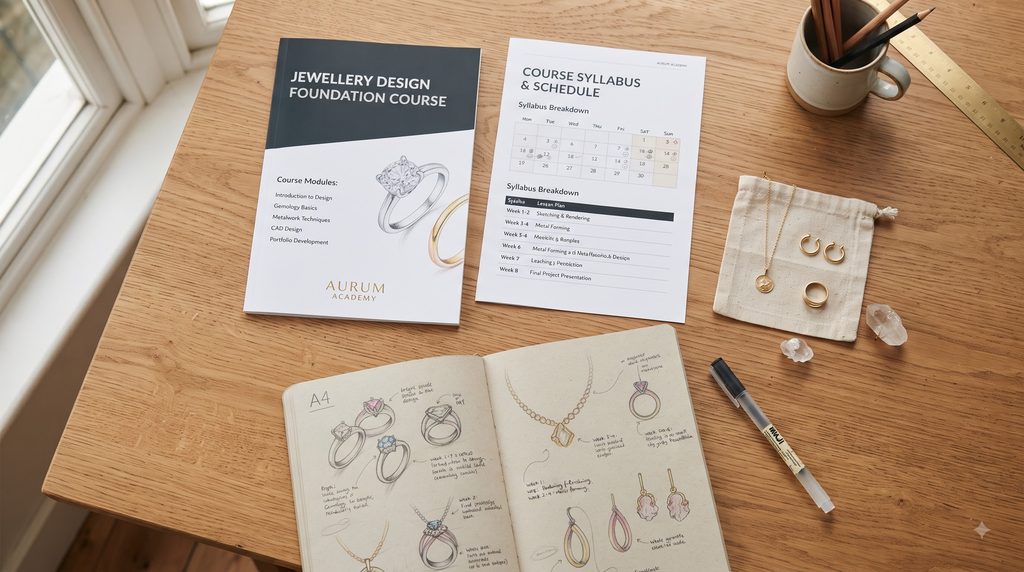
Curriculum Differences: Diploma vs 6-Month Course vs Short Classes
Jewellery Design Diploma Courses
Jewellery design diploma courses typically span 1-2 years and include every module listed above in significant depth, often supplemented with internships, live client projects, and industry visits. The extended duration allows for repeated practice, mentorship, and stronger technical mastery—particularly in CAD/CAM and metallurgy.
6 Months Jewellery Design Course
A 6 months jewellery design course condenses the curriculum into core essentials—typically focusing on design fundamentals, basic gemology, and introductory CAD training—while trimming down deeper technical modules like advanced metallurgy or extended internships. This format suits those who need faster, focused skill-building.
Short Classes and Workshops
These cover only one or two modules at a time (such as hand sketching or wax carving) and are ideal for beginners exploring specific skills without committing to a full syllabus.
What to Check in a Jewellery Design Course Brochure
Before enrolling, requesting the official jewellery design course brochure from an institute helps you verify:
- Total course duration and weekly class hours
- Module-wise breakdown and time allocation
- Software tools and licenses included
- Internship or placement guarantees (if any)
- Faculty credentials and industry experience
- Fee structure and payment terms
- Certification and accreditation details
A brochure often provides a marketing-friendly overview, so cross-referencing it with a detailed jewellery design syllabus PDF—if the institute provides one—gives a more accurate, module-by-module picture of what you’ll actually study.
Why Requesting a Syllabus PDF Is a Smart Move
Many institutes offer a downloadable jewellery design syllabus PDF upon inquiry, which typically includes:
- Week-by-week or month-by-month topic breakdown
- Assessment and evaluation criteria
- List of software and tools covered
- Practical project requirements
- Internship structure (for diploma programs)
Reviewing this document before enrollment helps set realistic expectations and allows you to compare multiple institutes on an apples-to-apples basis, rather than relying solely on promotional brochures or sales conversations.
Sample Curriculum Timeline (Diploma Format)
A typical jewellery design diploma unfolds in five broad phases, though exact timelines vary by institute:
- Phase 1 – Design Fundamentals (2-3 months): Covers sketching, illustration basics, and the history of Indian and global jewellery styles.
- Phase 2 – Gemology and Metallurgy (2-3 months): Introduces gemstone identification, diamond grading, and the properties of gold, silver, and platinum along with basic casting techniques.
- Phase 3 – CAD/CAM Software Training (3-4 months): Focuses on industry-standard design software such as RhinoGold, Matrix, and JewelCAD for digital modeling and manufacturing-ready designs.
- Phase 4 – Trend Research and Advanced Design Projects (2-3 months): Students work on market analysis, trend forecasting, and more complex design briefs.
- Phase 5 – Internship and Portfolio Development (3-4 months): The final phase involves real industry exposure through internships, culminating in a polished, presentation-ready portfolio.
Note: Exact timelines vary by institute; always confirm with the specific program’s official brochure or syllabus.
Key Takeaways When Comparing Curriculums
- Depth over duration – A longer course isn’t automatically better; check how much practical, hands-on training is actually included
- CAD/CAM weightage – Since digital design is now industry-standard, ensure adequate software training hours are allocated
- Real project exposure – Look for curricula that include live client briefs or internship components, not just theoretical modules
- Updated content – Ask whether the syllabus reflects current trends like lab-grown diamonds, sustainable sourcing, or 3D printing integration
- Certification value – Confirm whether the certificate or diploma is recognized by industry bodies or affiliated with reputed design councils
Final Thoughts
A well-designed jewellery design curriculum is the foundation of a successful career in this competitive, creativity-driven industry. Whether you’re comparing a full jewellery design diploma course or a condensed 6 months jewellery design course, always request the official jewellery design course brochure and, where available, a detailed jewellery design syllabus PDF before making your decision. Understanding exactly what you’ll learn—module by module—ensures your investment of time and money translates into real, job-ready skills.